THERAPY FOR THE GAYS
For the gays, the theys, the bi folks who are tired of having to prove they're still bi, and anyone else who's tired of explaining their identity before they can actually talk about their life.
You might be wondering how to be yourself and find a community and still be unsure and not offend your peers and still question the labels and and and and and…..
It's all a LOT.
And sometimes you just want somewhere you can talk about your relationship, your mom, your anxiety, your crappy week at work or literally anything else without having to spend the first 20 minutes explaining Queerness 101.
Like without saying “omg you're so brave” for just existing, can we actually take a second to acknowledge that our society tries to force you every which way to follow their heteronormative traditions, and you're saying “actually, no.”
It's a big deal, and Queer folk don't get the credit they deserve.
Maybe people are just jealous 😏😅
Isn't it so incredibly human, creative, heartbreaking, fluid, and amazing to live outside of the cis-het binary?
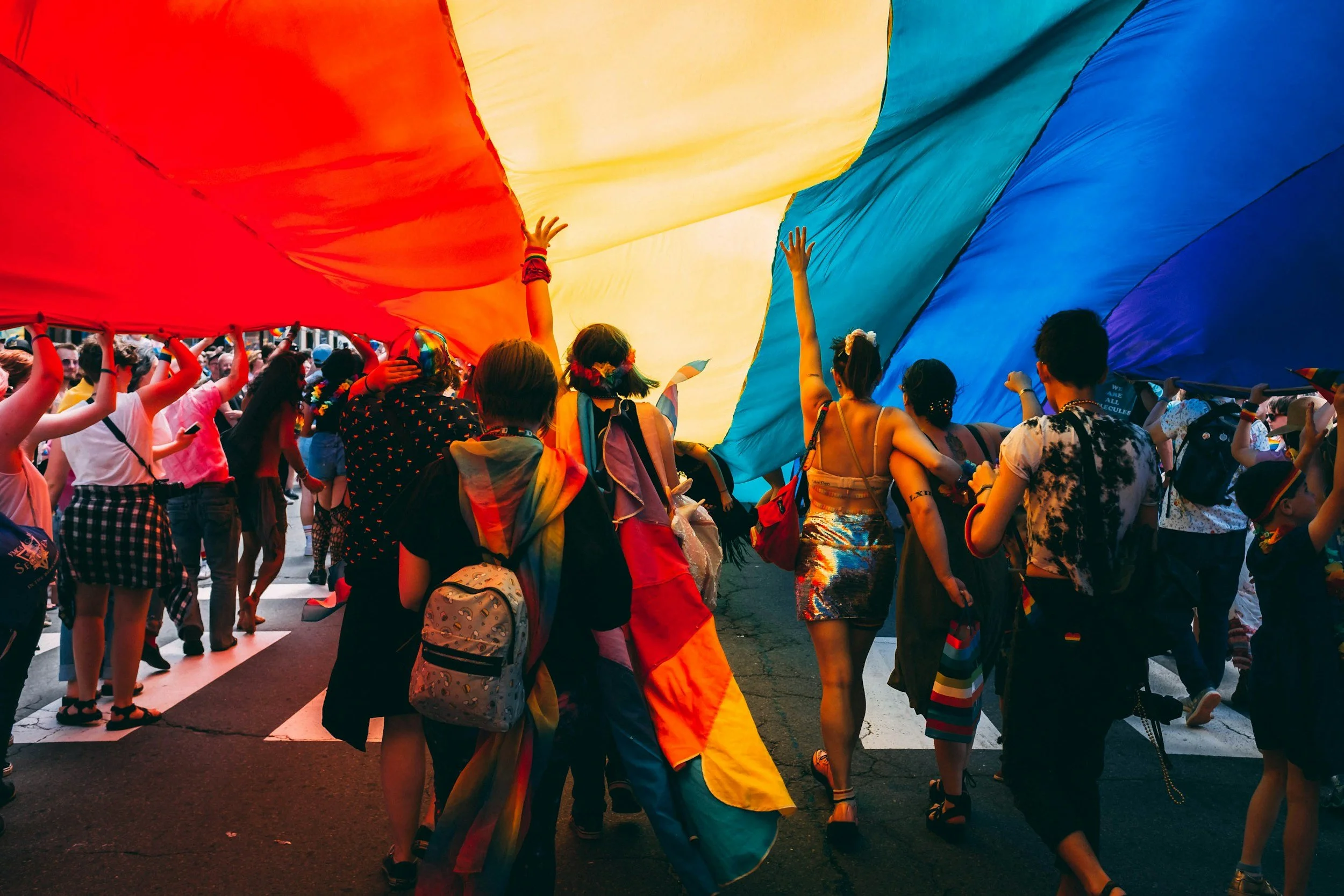
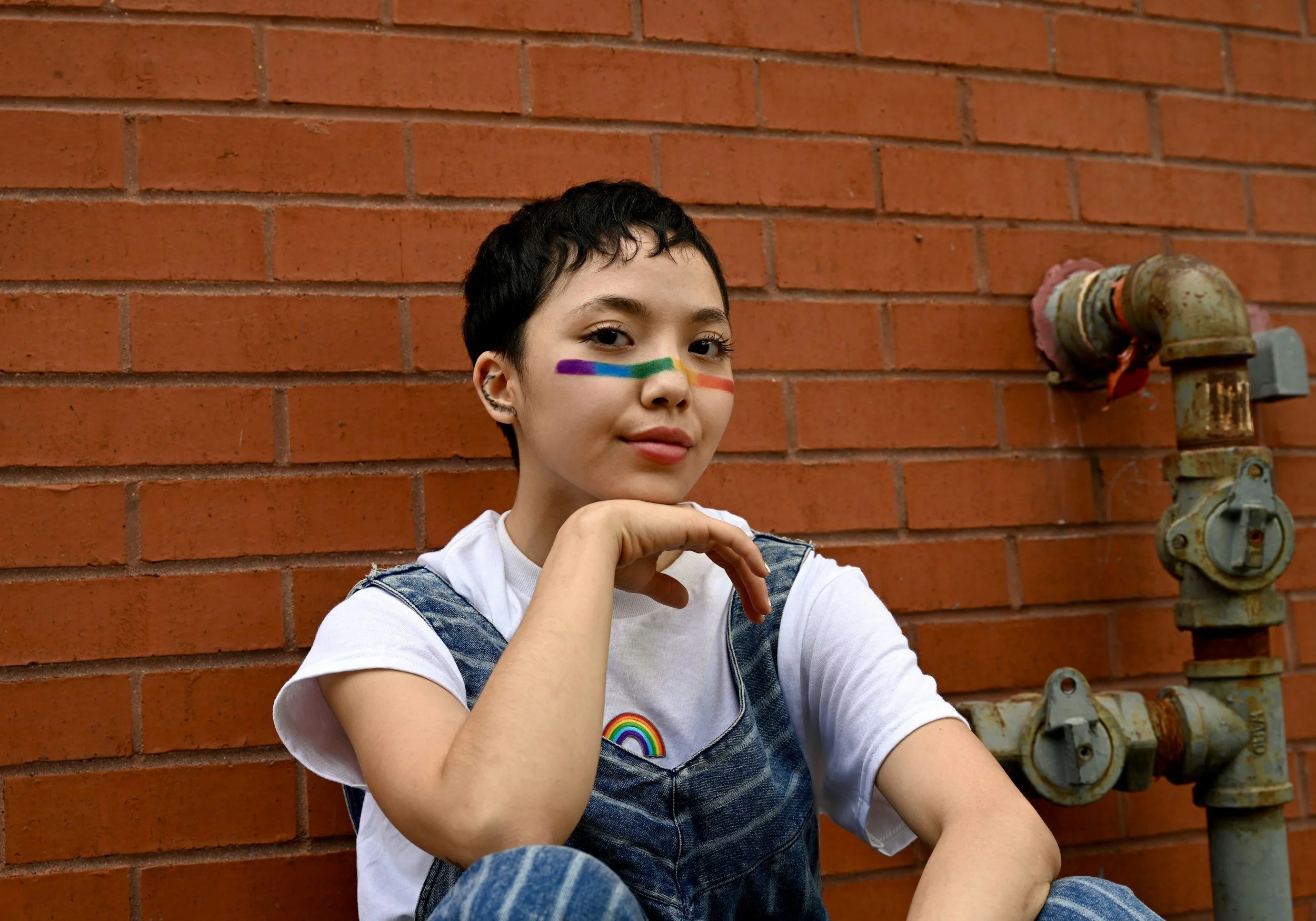
Your Queerness can matter without becoming the only thing we see about you.
Striking that balance of "my queerness is an important part of my identity and experience” and the reality that you can't be flattened to that one part of you; we’re not gonna treat every gay person the same, just as we wouldn't treat every straight person the same.
We know that if you're trans, two-spirit, asexual, bisexual—this doesn't have to be what we focus on in therapy all the time (or at all).
Whatever you're experiencing, YOU get to decide when we talk about it, how we talk about it, and what's actually important about it.
Being Queer can also mean navigating some stuff your straight friends simply don't have to think about.
You might be:
Stepping into your first queer relationship and feeling panicked, insecure, or just downright awkward.
Stepping into a “straight” presenting relationship and suddenly everyone tells you you're no longer bi 🥲
Trying to figure out if you're masc, fem, top, bottom-all while working a full time job.
Seeing everyone around you tout polyamory OR monogamy as “the right way” and being too exhausted to figure out what you actually want.
Dealing with homophobic and transphobic family members or colleagues who STILL want to make your Queerness a constant topic of conversation.
Experiencing genuine panic, anxiety attacks, dissociation, or other post-traumatic symptoms about your literal safety in an increasingly unsafe world.

We aren't going to pretend the bigger picture doesn't exist either.
2026 comes with increasing threats to all Queer folk, and pretending like it's not a part of your experience isn't the vibe either.
Honestly, we are so gay at Baldwin Psychotherapy, that we almost forget about how rampant homophobia, transphobia, and overall bigotry is—but our constant conversations about fighting oppressive systems means that we are locked in to the current-day harms.
Are we as therapists gonna come in and tell you “no you can never avoid again”??
It’s usually an unfair f****d up mess—and, it can come with the most beautiful, transformative, special moments of Queer joy.
Whatever you're experiencing, YOU get to decide when we talk about it, how we talk about it, and what's actually important about it.
Learn more about 2SLGBTQIA+ Topics from our Therapists
*
Learn more about 2SLGBTQIA+ Topics from our Therapists *
Frequently Asked Questions About LGBTQIA+ & Queer-Affirming Therapy
-
Basically, therapy where your therapist isn't treating your sexuality or gender identity like a problem that needs to be solved. Queer-affirming therapy recognizes that your identity is one part of your whole, complicated, wonderful human self—and that things like homophobia, transphobia, discrimination and heteronormativity can have a very real impact on your mental health. You shouldn't have to spend half your session teaching your therapist Queerness 101 before you can actually talk about your life.
-
Nope. There are incredible straight and cis therapists who provide genuinely affirming care. AND, sometimes there's something really freaking nice about sitting across from someone who just gets it. You might feel more comfortable talking about dating, sex, gender, family, discrimination or literally anything else without wondering whether your therapist understands the context. Ultimately, the right therapist is the person you feel safe enough to actually be yourself with.
-
PLEASE do. You don't need to arrive with the perfect label—or any label. You can be gay, bi, trans, non-binary, queer, questioning, somewhere in the middle or currently thinking “I literally have no idea.” Therapy can give you somewhere to explore what feels right without someone else deciding who you are for you. There isn't a quiz at the end. You get to figure this stuff out at your own pace.
-
Being Queer isn't a mental health problem. Living in a world that sometimes treats your Queerness like a problem absolutely can be. Homophobia, transphobia, discrimination, rejection, hiding parts of yourself, worrying about your safety or constantly wondering whether a space is actually safe can take a freaking toll.
That can show up as anxiety, depression, shame, people-pleasing, isolation, hypervigilance or feeling like you're always a little bit on guard. Therapy isn't about helping you become "less Queer." It's about having somewhere to unpack what you've been carrying without pretending the systems and people around you haven't played a role.
-
Yes—and we're not going to decide whether you should. Coming out can involve relationships, family, culture, religion, work, community, finances and, importantly, safety. Therapy can give you somewhere to untangle all of that, think through what you want and make decisions that feel right for your actual life. Coming out isn't something you owe anyone, and there's no universal timeline you're supposed to follow.
-
Hell yes. First queer relationships, dating apps, jealousy, attachment, sex, boundaries, monogamy, polyamory, breakups, chosen family, figuring out what the hell you actually want—we can talk about all of it. Queer relationships don't need to be squeezed into straight relationship rules to be healthy. Therapy can help you figure out what works for you and your relationships, rather than what everyone else thinks they're supposed to look like.