THERAPY FOR ANXIETY
For the folks whose brains won’t shut up, or for those who may know logically that everything is probably fine, but absolutely do not feel fine.
Anxiety is a tough one. It's some messed up combination of worst case scenarios, a feeling in your body that you can't shake, a constant swirling argument about this that and the other thing, a list of all of the things that you're doing wrong, and that shrinking voice of the most critical person you've ever met in your life….
Easy to tackle in therapy, right?
You might find yourself convincing yourself that something is wrong with you or you have “no reason to feel anxious.” Or maybe you’re in constant arguments in your own head with logical thoughts that can't quite shake how you feel.
Those moments of:
“I know this isn't true, BUT…”
Whether you resonate with all of that or just one piece, anxiety can show up in a LOT of different ways.
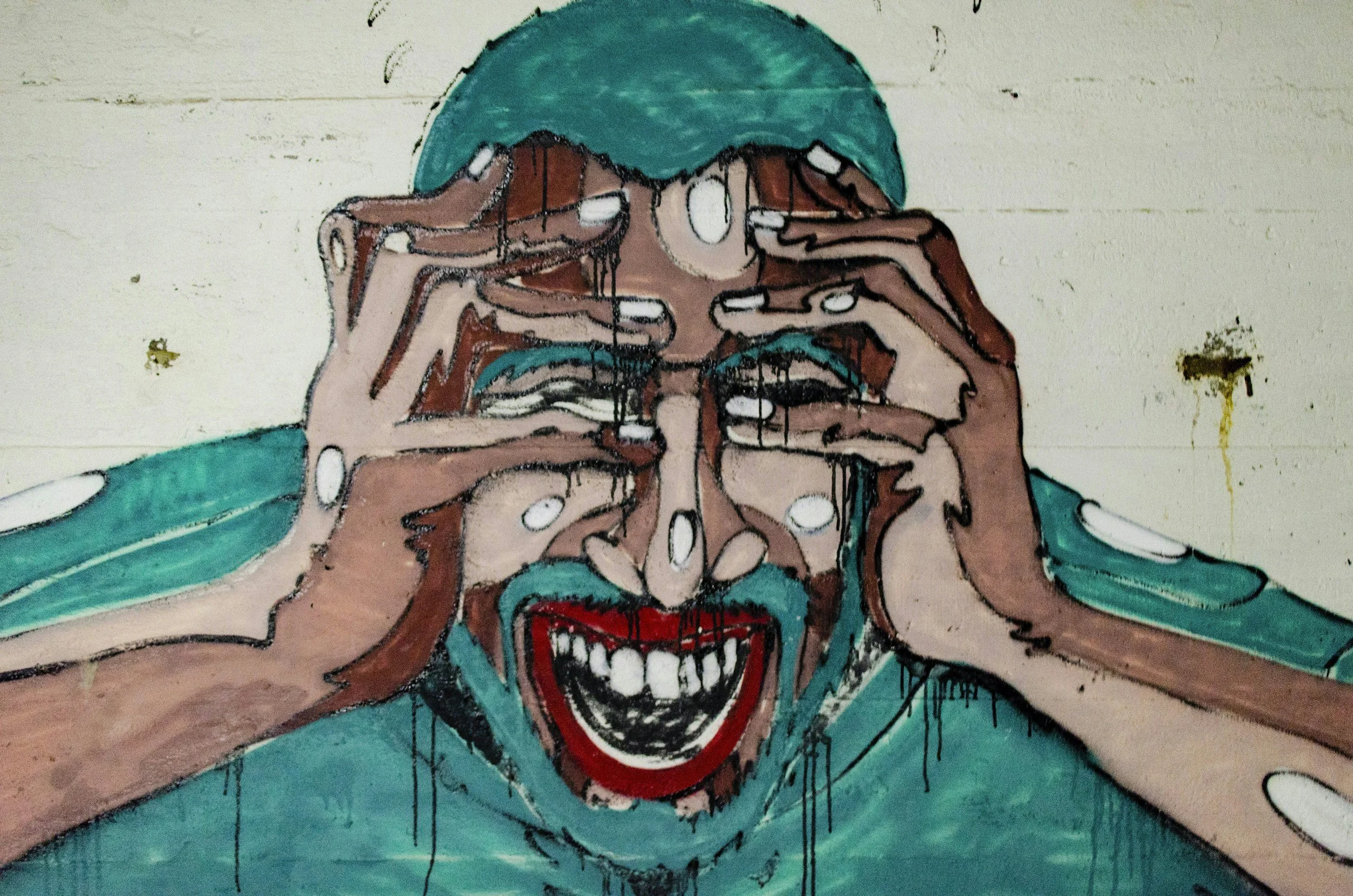
Maybe anxiety isn't only happening in your head. You feel nauseous, shaky, restless, or otherwise unsettled in your body. You answer “okay” when someone asks “how are you?” even though you can't breathe. You’re exhausted, but when it’s finally time to sleep, your mind won't stop racing.

Anxiety can make you do a lot of things just to get a little bit of relief.
Doom scrolling for hours on end and feeling unable to stop.
Checking, re-checking, and checking things again to feel a sense of control.
Drinking or smoking weed at the end of the day to finally get some quiet in your mind.
Feeling stuck around making decisions because you're in a constant loop of analysis paralysis (so you end up making no decision at all).
You might find yourself:

Now listen… here’s the tough tough TOUGH part and I'll virtually hold your hand while I say this—
Anxiety thrives off of avoidance.
And you might think, "I don't avoid anything, what do you mean?” And this is how most folks come into our doors.
Unfortunately, those endless distractions, keeping busy constantly, or convincing yourself that you're overreacting are super common ways that we avoid our feelings.
Not always intentionally, and definitely not because we think it's the most helpful—but because we have no clue what else to do that will give us any relief.
Are we as therapists gonna come in and tell you “no you can never avoid again”??
Absolutely not.
Avoidance is sometimes a NECESSARY thing to give us a damn break.
And, with so much care, patience, and negotiation with you, we might slooooowly help you see that anxiety is not the enemy—and that you may actually feel LESS distressed by it when you let it in a little more.
Controversial, I know, but this is backed by the research.
Learn more about anxiety from our therapists
*
Learn more about anxiety from our therapists *
Frequently Asked Questions about Anxiety Therapy
-
Anxiety can look like racing thoughts, constant overthinking, worst-case scenarios, irritability, trouble sleeping, difficulty making decisions or feeling like you can never fully relax. It can also show up physically: nausea, shaking, sweating, a racing heart, muscle tension, restlessness or that general “something is wrong” feeling you can't quite explain. And yes - you can be functioning perfectly well on the outside while your brain is absolute chaos inside.
-
Because anxiety doesn't always wait for an actual emergency before sounding the alarm. You can logically know you're safe and STILL feel anxious—which is why arguing with yourself usually turns into an exhausting loop of “I know this isn't true, BUT…” Your anxiety is real even when you can't point to one obvious reason for it. Part of therapy can be figuring out what your anxiety is responding to and what it might be trying really, really hard to protect you from.
-
Stress usually has something pretty obvious attached to it: the deadline, the fight, the giant to-do list, the fact that your life is genuinely a shit show this week. Anxiety can stick around even when there isn't a clear problem to solve. Your brain or body might still be screaming “SOMETHING IS WRONG” when logically, you know you're okay. Both are normal human experiences. When anxiety starts taking up a ton of your time, energy or mental space, it might be worth getting some support.
-
Absolutely. Anxiety doesn't have to mean having panic attacks. It can look like overthinking everything, constantly preparing for the worst, needing reassurance, avoiding things, checking and re-checking, struggling to make decisions or never quite being able to relax. You might even look completely calm and put-together while your brain is running approximately 47 worst-case scenarios at once. Panic attacks are one way anxiety can show up, not a requirement.
-
Because reassurance feels REALLY good... for about five minutes. When anxiety has you questioning yourself, hearing someone say “you're okay,” “they're not mad at you,” or “you didn't do anything wrong” can give you the relief your brain is desperately looking for. The problem? That relief doesn't always last, so pretty soon you need reassurance again.
Over time, you can get stuck relying on other people to make the anxiety go away instead of trusting yourself to handle the uncertainty. Therapy can help you understand where that need for reassurance comes from and slowly build your ability to sit with the “but what if?” without needing someone else to immediately make it disappear.
-
You don't need to wait until anxiety has completely taken over your life. If you're spending a ton of energy managing your thoughts, avoiding things, checking and re-checking, struggling to sleep, feeling anxious in your body or organizing your life around trying not to feel anxious, it might be worth talking to someone. You also don't need to know whether you officially “have anxiety.” You can literally start with: “My brain won't shut up and I'm exhausted.” We can work from there.